Геасса
Езотерика

Сприяння дослідженню, вивченню та практиці езотеричних мистецтв
У Мистецтві розпізнається багато різних потойбічних істот. У нашій системі ми бачимо, що саме Королева, відома в давнину як Леді або Дама, є провідною.

Goddess Diana
The Lady in many Witchcraft Traditions
Як доказ припущення, що жіноча істота з потойбічного світу, відома як Дама, була пов'язана з історичним чаклунством, можна звернутися до п'єси «Маска королев», написаної в 1609 році в Шотландії. У ній є чудова сцена, де зображено збір відьом, які викликають Даму. Далі наведено адаптацію оригіналу. Це не дослівна цитата, а моя власна, з використанням символіки, властивої нашим практикам, яка добре поєднується з цим дуже давнім декламуванням. Якщо ви хочете побачити повну оригінальну версію 1609 року, будь ласка, зверніться до «Маски королев» Бена Джонсона, Чари 1-3.
«Відьми, залишайтеся, ми шукаємо нашу Даму, кличемо Її на Її ім'я
Чарівні чари ми використовуємо, щоб Вона швидко помазала і прийшла!
Дамо, Дамо, варта встановлена. Швидше йдіть, нас усіх зустріли.
З озер, з боліт, зі скель, з лігв,
З гробниць, з могил, ось ми!
Погода гарна, вітер добрий, Вгору, Дамо, на свого дерев'яного коня,
Підверни свою сукню, сідай на Козу або Зеленого Півня!
Зроби вуздечку з ниток, щоб згорнути милі, які ти подолала.
Швидше йдіть, бо ми всі залишимося!
Ворон вже на вулиці, змія, заєць і жаба.
Веретено обертається, Місяць повний.
Рів зроблено, цвях і центр.
Бракує лише Вона, Вона, що дає пристрасть і силу!
Швидше, Пані, принеси свою частину.
Шпори, шпори маленького Мартіна,
Весело, весело змусь його плисти.
Черв'як у його роті, колючка в хвості.
Вогонь угорі, вогонь унизу.
З батогом у руці, щоб змусити його піти.
О Вона йде!
Like all esoteric practices, Old Craft groups are tied to an egregore that is specific to their traditions. With these come connections to otherworld beings - the entities and spirits who form the living heart of these systems. Today there is a tendency for many to place emphasis on connecting with the “Master”, “Old Hornie”, the mysterious masculine being so beloved in older Craft traditions. Having said that, almost all Traditional Witches do give at least a passing nod to the Lady, the Dame. However, in many current groups her presence and importance are seldom discussed.
“The Masque of Queens” presents a different possible scenario. One in which the Dame is seen as vital to Witchcraft. In my experience, I must agree. In fact, I would suggest that the Dame is the primary otherworld being whose power rests at the center of certain hidden Old Craft teachings. Unfortunately, the limits of space prohibit me from going into these teachings at length. Perhaps a more pressing question is, who is the Dame?
We see different references to her in beliefs linked to Witchcraft, from the Basque Lady who resides in the caves and mountains of the Pyrenees[3], to the Queen of Elphame in folklore. One of my favorite representations of her is in the stories surrounding the underworld Queen Sybille, sometimes referred to as Sybil or Sibyli. Sybille is at once portrayed as a beautiful, sensual woman, and at other times as a powerful serpent or dragon. She is both sorceress and seductress; loyal to those in her following yet a powerful foe when provoked. As Sybille she is clearly seen as the innate power within the land, and yet Reginal Scot also links Sybille to the Moon Goddess Diana. This dichotomy of being both the Bright Queen and Dark Goddess, earthy and chthonic yet celestial and mysterious, rests at the heart of Old Craft teachings surrounding the Dame.

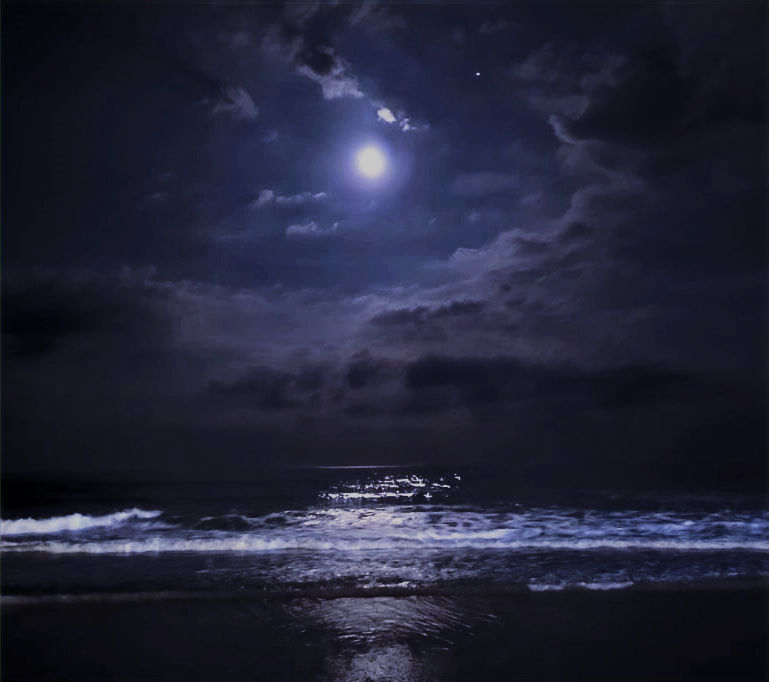
Full Moon over the Forest
The Bright Queen of Traditional Witchcraft

Black candle and mirror Spell
Calling on the power of the Dark Goddess
To be clear, the Dame is no ‘archetype’, nor would I say is she a ‘form’ of ‘The Goddess’. While Old Craft teachings recognize the duality inherent in nature expressed generally through different dynamic, complementary forces, ‘otherworld beings’ such as the Dame are seldom seen as one dimensional cultural images for general forces. Rather, in my training and experience it seems obvious that the Dame is an actual individual, sentient being .. a ‘spirit’ of a more complex order of being, perhaps of a nature that most people would struggle to comprehend. Nonetheless, she is real and alive in multiple dimensions, multiple states of existence.
I think it is fair to say that at some point in the past a link was forged between certain humans and this Lady. This was pivotal as this formed a bond which still exists today. And it is this bond that rests at the core of many Old Craft practices. The Dame is the serpent power in the land. She is the pull of the Moon that the Witch answers to. In certain older traditions her power is carried in the red cloak. These were, and still are, worn by women who represent her. We see this in documented accounts of Irish cunning women wearing red cloaks when consulted. Micheal Howard recounts that women who practiced magic in East Anglia England often wore redcaps, or cloaks[4]. This is further documented by Corinne Boyer as she recounts many folkloric sources describing the wearing of red cloaks and garments by Witches[5]. Red, power, the life force contained in blood, the power within the land, the power of fire, the serpent breath of lore, the living pulse of nature. This is the province of the Dame. She is life, from the first urge of sexual desire to the blood that flows in giving birth. Sorceress, seductress, bringer of life. It is in this regard that the red cloak is worn by the Mistress in certain secret rites. Yet she also wears the black cloak of return, death as transcendence. Through her, renewal and transformation occur. She, the Dame, is the power of the Witch.
“Quickly, Dame, bring your part . . .
A fire above and fire below,
With whip in hand to make him go.
O, now she comes!”
[1] Pennick, Nigel. Operative Witchcraft. 2012, 2019.23
[2] Wilby, Emma. “The Visions of Isobel Goodie” 2010.
Bottrell, William and Joseph Blight. “Stories and Folklore of West Cornwall” 1880.
[3] Tort, Julia Carreras Tort. “Land of the Goat: Witchcraft in the Pyrenees” 2024.
[4] Howard, Michael “East Anglian Witches and Wizards” 2017.
[5] Boyer, Corinne “Between the Witch and the Devil” 2024.