Geassa
Ésotérique

Promouvoir la recherche, l'étude et la pratique des arts ésotériques
Dans l'Art, on reconnaît de nombreux êtres d'un autre monde. Dans notre système, c'est la Reine, autrefois appelée la Dame, qui occupe une place prépondérante.

Goddess Diana
The Lady in many Witchcraft Traditions
Pour étayer l'hypothèse selon laquelle un être féminin d'un autre monde, connu sous le nom de la Dame, était associé à la sorcellerie historique, on peut se référer à « Le Masque des Reines », une pièce écrite en 1609, en Écosse. On y trouve une scène magnifique où un groupe de sorcières est représenté invoquant la Dame. Ce qui suit est une adaptation de l'original. Il ne s'agit pas d'une citation mot pour mot, mais plutôt de ma propre citation, utilisant un symbolisme inhérent à nos pratiques qui s'accorde bien avec cette récitation très ancienne. Si vous souhaitez voir la version originale complète de 1609, veuillez vous référer à « Le Masque des Reines » de Ben Jonson Charme 1 à 3.
« Sorcières, restez ! Nous cherchons notre Dame. Invoquez-la par son nom.
Le charme que nous utilisons, qu'elle oint rapidement et qui vient !
Dame, Dame, la garde est levée. Vite, nous sommes tous réunis.
Des lacs, des marais, des rochers, des tanières,
Des tombeaux, des tombes, nous voici !
Le temps est beau, le vent est bon. Debout, Dame, sur ton cheval de bois,
Remonte ta robe, enfourche la Chèvre ou le Coq Vert !
Fabrique une bride de fil pour enrouler les kilomètres que tu as parcourus.
Vite, car nous restons tous !
Le Corbeau est en liberté, le serpent, le lièvre et le crapaud.
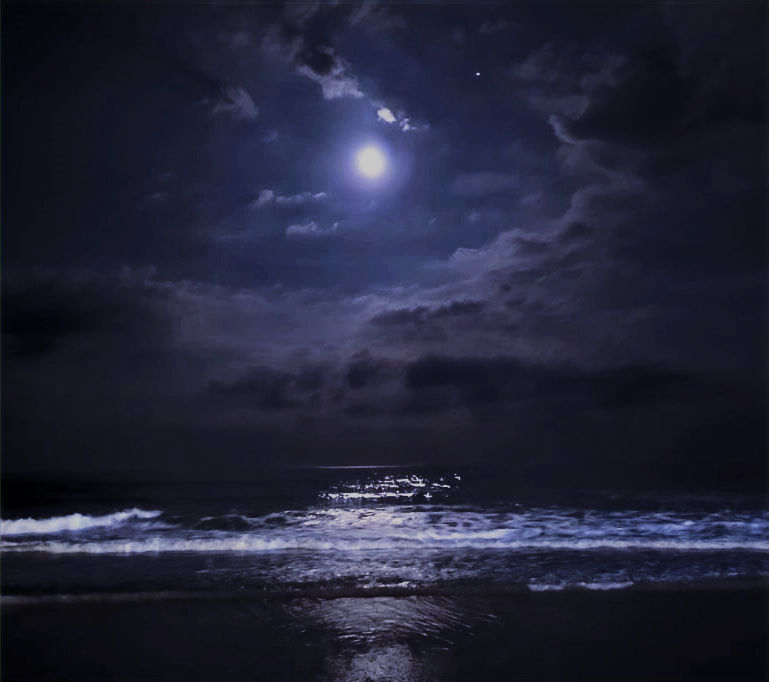
Le fuseau tourne, la Lune est pleine.
Le fossé est creusé, le clou et au centre.
Il ne manque qu'Elle, Celle qui donne passion et puissance !
Vite, Dame, apportez votre contribution.
Éperonnez, éperonnez le petit Martin,
Gaiement, gaiement, faites-le naviguer.
Un ver dans sa bouche, une épine dans sa queue.
Feu en haut, feu en bas.
Avec un fouet à la main pour le faire partir.
Ô Elle arrive !
Like all esoteric practices, Old Craft groups are tied to an egregore that is specific to their traditions. With these come connections to otherworld beings - the entities and spirits who form the living heart of these systems. Today there is a tendency for many to place emphasis on connecting with the “Master”, “Old Hornie”, the mysterious masculine being so beloved in older Craft traditions. Having said that, almost all Traditional Witches do give at least a passing nod to the Lady, the Dame. However, in many current groups her presence and importance are seldom discussed.
“The Masque of Queens” presents a different possible scenario. One in which the Dame is seen as vital to Witchcraft. In my experience, I must agree. In fact, I would suggest that the Dame is the primary otherworld being whose power rests at the center of certain hidden Old Craft teachings. Unfortunately, the limits of space prohibit me from going into these teachings at length. Perhaps a more pressing question is, who is the Dame?
We see different references to her in beliefs linked to Witchcraft, from the Basque Lady who resides in the caves and mountains of the Pyrenees[3], to the Queen of Elphame in folklore. One of my favorite representations of her is in the stories surrounding the underworld Queen Sybille, sometimes referred to as Sybil or Sibyli. Sybille is at once portrayed as a beautiful, sensual woman, and at other times as a powerful serpent or dragon. She is both sorceress and seductress; loyal to those in her following yet a powerful foe when provoked. As Sybille she is clearly seen as the innate power within the land, and yet Reginal Scot also links Sybille to the Moon Goddess Diana. This dichotomy of being both the Bright Queen and Dark Goddess, earthy and chthonic yet celestial and mysterious, rests at the heart of Old Craft teachings surrounding the Dame.

Full Moon over the Forest
The Bright Queen of Traditional Witchcraft

Black candle and mirror Spell
Calling on the power of the Dark Goddess
To be clear, the Dame is no ‘archetype’, nor would I say is she a ‘form’ of ‘The Goddess’. While Old Craft teachings recognize the duality inherent in nature expressed generally through different dynamic, complementary forces, ‘otherworld beings’ such as the Dame are seldom seen as one dimensional cultural images for general forces. Rather, in my training and experience it seems obvious that the Dame is an actual individual, sentient being .. a ‘spirit’ of a more complex order of being, perhaps of a nature that most people would struggle to comprehend. Nonetheless, she is real and alive in multiple dimensions, multiple states of existence.
I think it is fair to say that at some point in the past a link was forged between certain humans and this Lady. This was pivotal as this formed a bond which still exists today. And it is this bond that rests at the core of many Old Craft practices. The Dame is the serpent power in the land. She is the pull of the Moon that the Witch answers to. In certain older traditions her power is carried in the red cloak. These were, and still are, worn by women who represent her. We see this in documented accounts of Irish cunning women wearing red cloaks when consulted. Micheal Howard recounts that women who practiced magic in East Anglia England often wore redcaps, or cloaks[4]. This is further documented by Corinne Boyer as she recounts many folkloric sources describing the wearing of red cloaks and garments by Witches[5]. Red, power, the life force contained in blood, the power within the land, the power of fire, the serpent breath of lore, the living pulse of nature. This is the province of the Dame. She is life, from the first urge of sexual desire to the blood that flows in giving birth. Sorceress, seductress, bringer of life. It is in this regard that the red cloak is worn by the Mistress in certain secret rites. Yet she also wears the black cloak of return, death as transcendence. Through her, renewal and transformation occur. She, the Dame, is the power of the Witch.
“Quickly, Dame, bring your part . . .
A fire above and fire below,
With whip in hand to make him go.
O, now she comes!”
[1] Pennick, Nigel. Operative Witchcraft. 2012, 2019.23
[2] Wilby, Emma. “The Visions of Isobel Goodie” 2010.
Bottrell, William and Joseph Blight. “Stories and Folklore of West Cornwall” 1880.
[3] Tort, Julia Carreras Tort. “Land of the Goat: Witchcraft in the Pyrenees” 2024.
[4] Howard, Michael “East Anglian Witches and Wizards” 2017.
[5] Boyer, Corinne “Between the Witch and the Devil” 2024.